![[personal profile]](https://www.dreamwidth.org/img/silk/identity/user.png)


近づくな危険! Don’t get close, it’s dangerous!
Feb. 18th, 2026 11:00 pm![[syndicated profile]](https://www.dreamwidth.org/img/silk/identity/feed.png) maru_feed
maru_feedFirst new collectible pieces from Syzygy Forge are stunning!
Feb. 18th, 2026 02:31 pmthe_one_ring_net_feed
Back in October we shared the news that our friends at Syzygy Forge were going to be bringing us some new items in 2026. They didn't give many hints about that these items would be - adding to the collectible whisky they already make. But now their first new items have been revealed!

They tell us:
We will be producing three engraved wooden barrel lids: one featuring the primary The Lord of the Rings logo, one The Prancing Pony, and one The Green Dragon. Each design will be limited to 500 pieces, individually numbered on the reverse.
Feast your eyes!


The Prancing Pony and The Green Dragon artwork were designed by none other than Daniel Falconer, whose work at Weta Workshop, and particularly on Peter Jackson's movies, is of course well known to us all.
Syzygy's team go on to tell us:
The pieces themselves are quite rustic. They are made from authentic reclaimed whiskey barrels, and hearken to the “Barrels Out of Bond” chapter in The Hobbit, and are well suited for an office, study, or collector’s space.
They're available for pre-order now. (When visiting Syzygy's site, you'll notice they also have a John Howe Collection coming soon! Can't wait to see that!) And even better news - you can use the code theonering15 to receive 15% off your order! Order yours before they're gone!
How America’s Industrial Elite Built Their Own Palaces
Feb. 18th, 2026 03:15 pmjstordaily_feedCleveland, Ohio was one of the great American industrial powerhouses of the late nineteenth and early twentieth centuries. Founded in July 1796 by General Moses Cleaveland, its namesake, the city had become the sixth-largest in the United States by 1910. The architecture built during this economic boom showed the wealth and grandeur Cleveland once held.
The latter half of the nineteenth century saw great industrial growth—and thus economic growth—in and around Cleveland. As Elizabeth Barlow Rogers explains in SiteLINES: A Journal of Place, “[t]he demand for steel at a critical moment in the nation’s history in order for other cities to also construct large industrial plants and manufacture tracks, railroad cars, automobiles, and various additional steel-based products ensured their prosperity.” During Cleveland’s Gilded Age, grand architecture rose across the city, shaped by the City Beautiful movement and popular revival styles. Images of Cleveland’s historic architecture, preserved in the Architecture of Greater Cleveland and Ohio collection at Cleveland Public Library and shared via JSTOR, offer visual insight into the styles and structures that defined the city during this period of rapid growth.
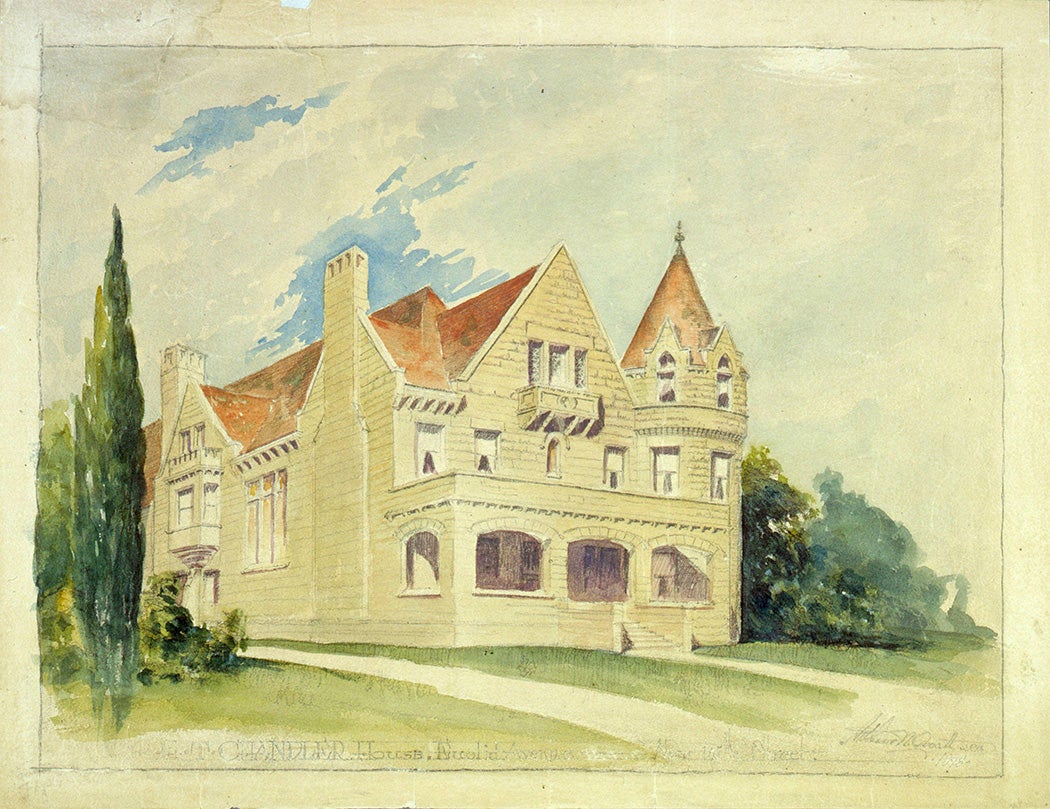
This was the period in which Cleveland’s “Millionaires’ Row” on Euclid Avenue developed. Along this grand street, writes Carol Poh Miller in the Journal of the Society of Architectural Historians, “lived Cleveland’s contented, native-born aristocracy: the president and partners of Standard Oil, the developer of the arc light and practical electrical power, financiers and industrialists, shipping and iron ore executives, bankers and lawyers.” John D. Rockefeller, of Standard Oil fame, lived in a mansion on Euclid Avenue before relocating to New York City. The architectural styles of “Millionaires’ Row” varied. Stately homes could be Gothic or Romanesque Revival, Queen Anne or Neoclassical.
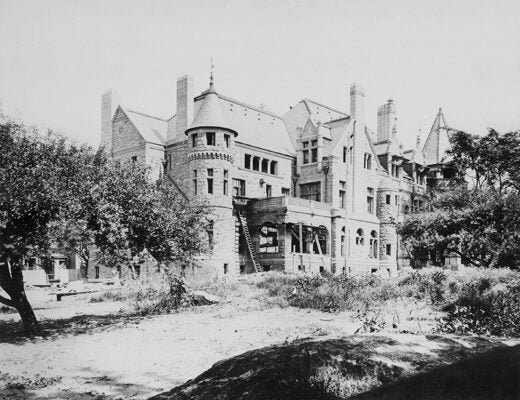
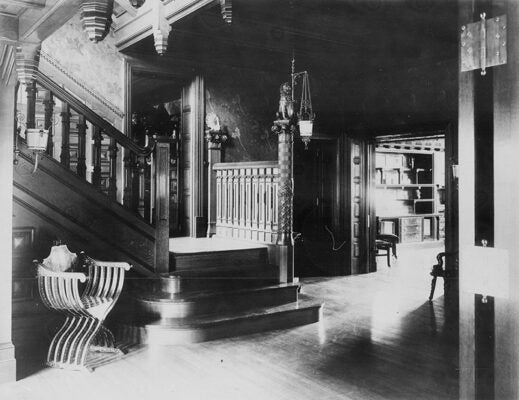
Charles Frederick Schweinfurth was one of the architects who shaped the built environment of the wealthy in Cleveland. Born in upstate New York likely in 1857, Schweinfurth spent time working in architectural offices in both New York City and Washington, D.C. before making his way to Cleveland. He was hired by Sylvester T. Everett, a wealthy Cleveland financier, to design his mansion.
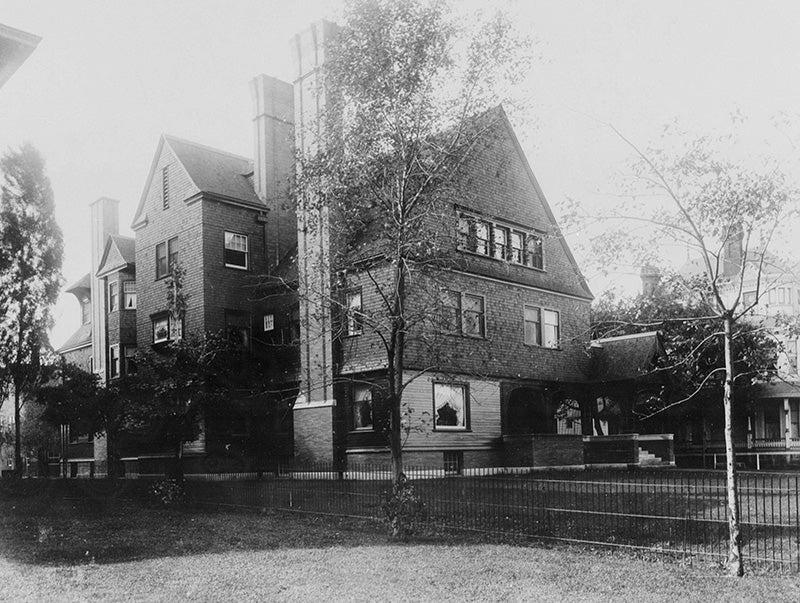
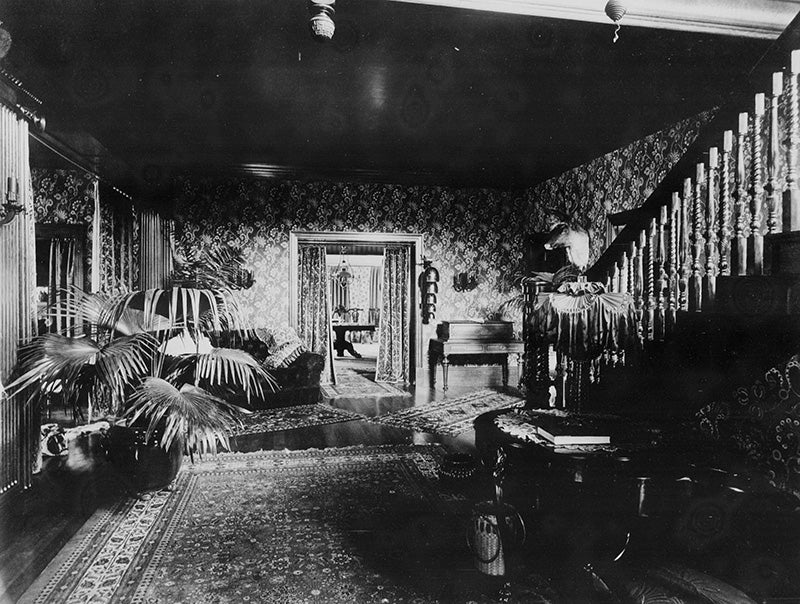
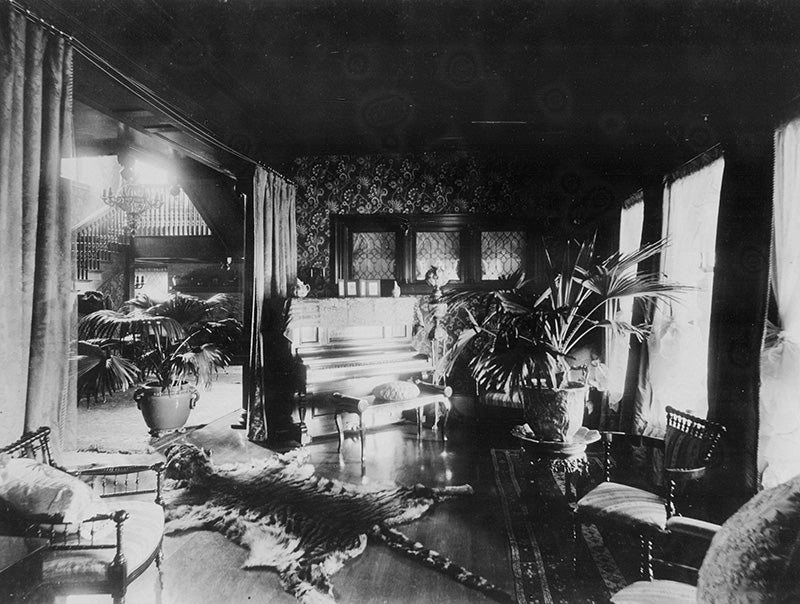
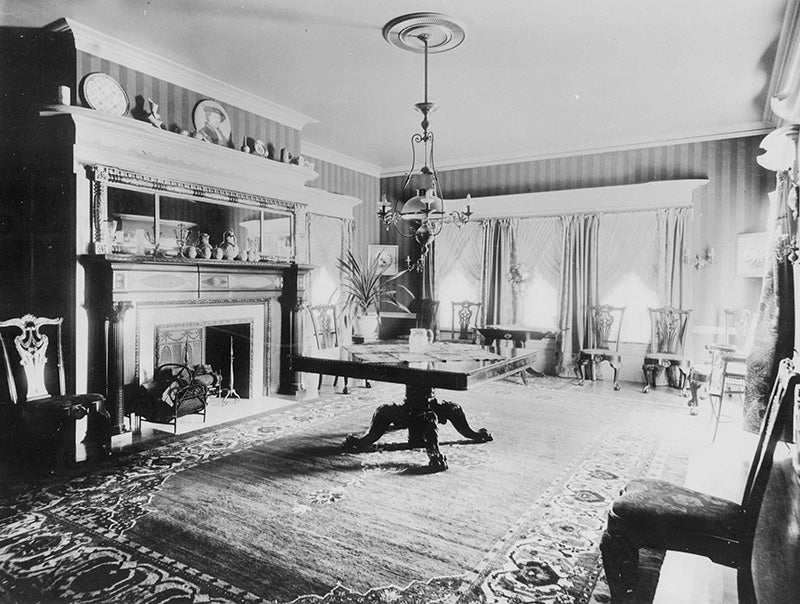
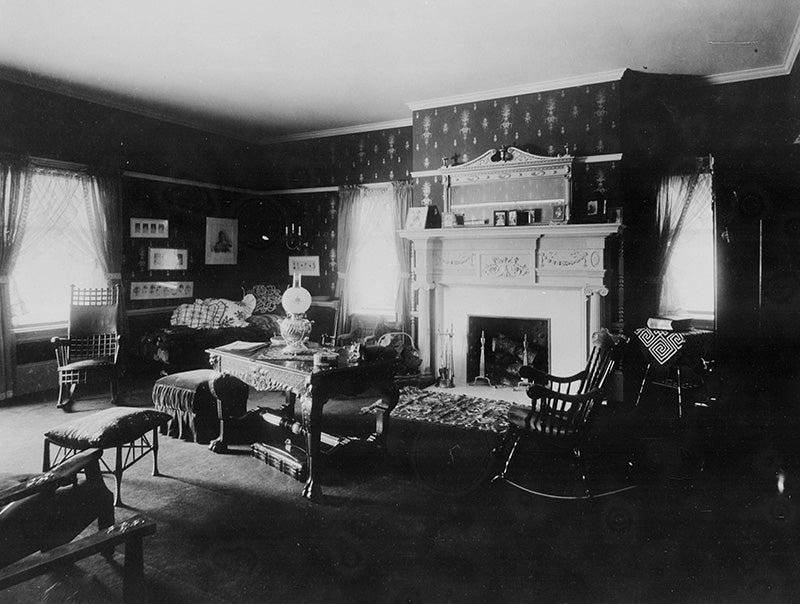
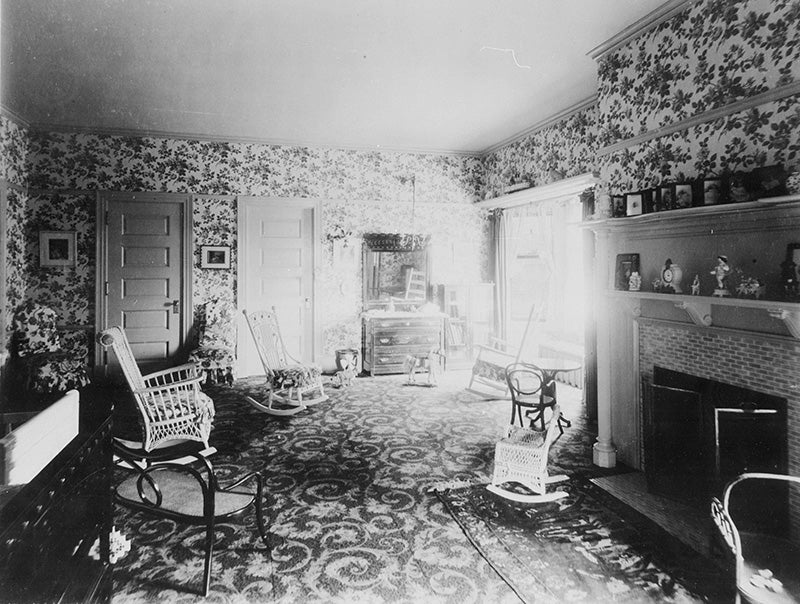
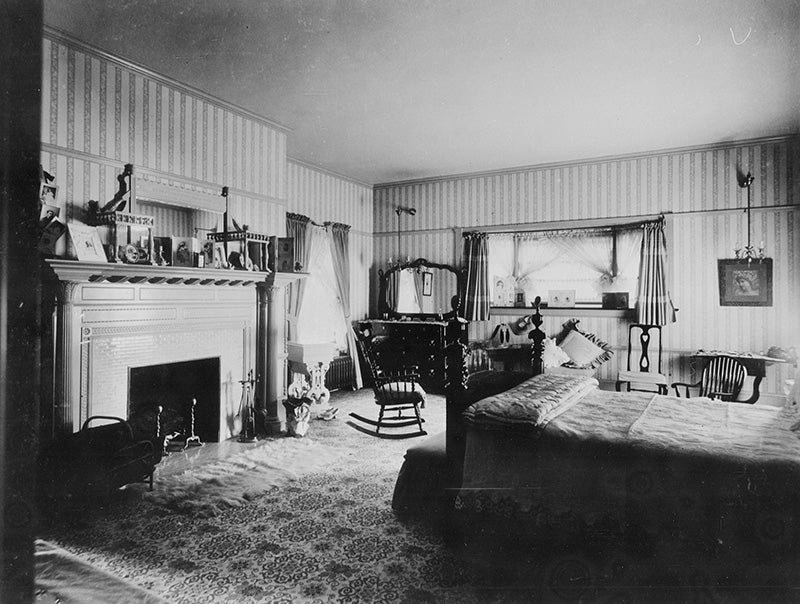
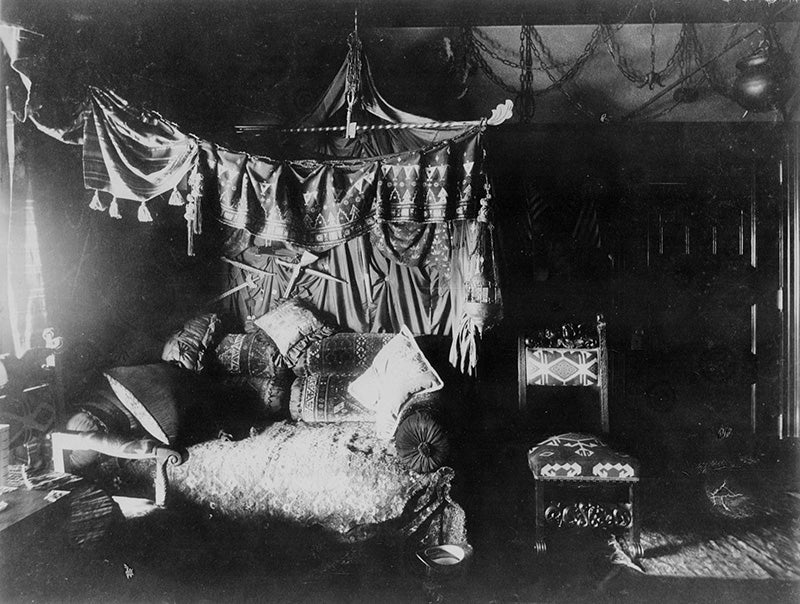
Everett’s commission was the first Schweinfurth would receive along “Millionaires’ Row.” Schweinfurth would go on to design eighteen of the grand homes on Euclid Avenue, which architectural historians credit to his “special talent for translating the personal aspirations of his clients into meaningful architectural forms without compromising his own unique style.”
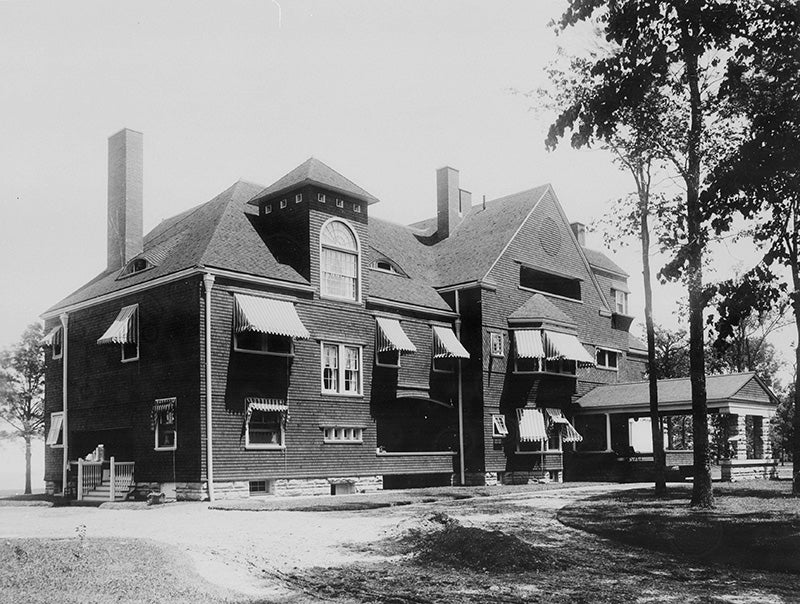
Cleveland’s Euclid Avenue was not just for residential architecture, however. The city’s wealthy were drawn to build their homes there because of its close proximity to Cleveland’s commercial center, where their offices and other commercial businesses were located.
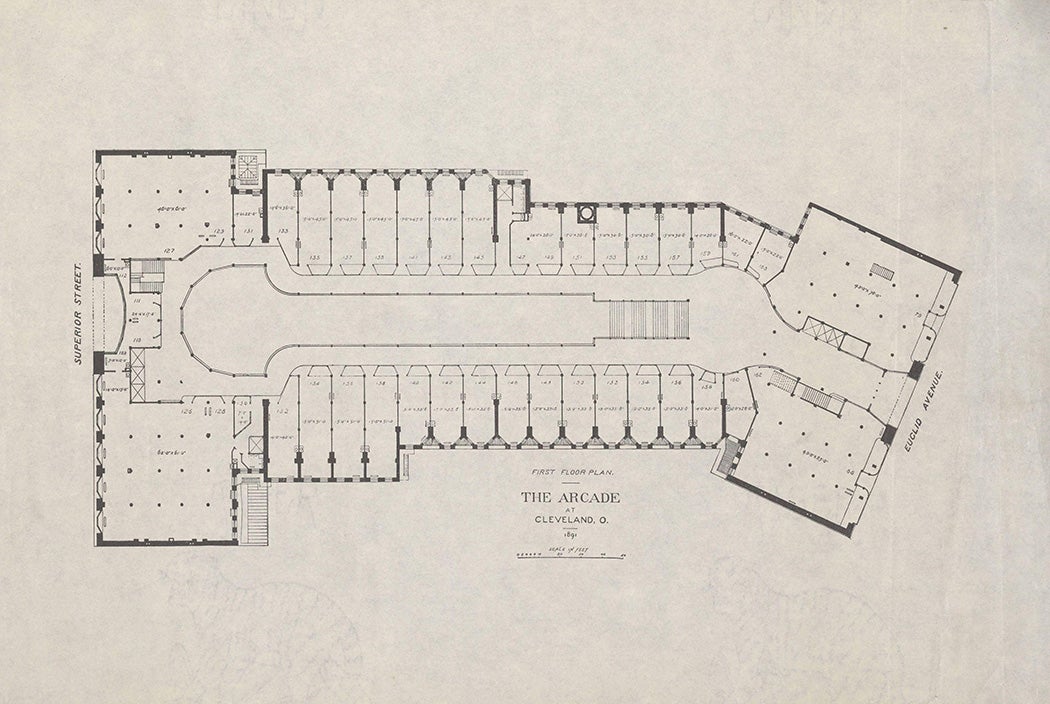
The Arcade, which still stands in Cleveland today, is an excellent building from the period whose design was based on the glass and iron shopping arcades typically found in Europe. Historian Mary-Peale Schofield notes that “the full development of the decorative iron and glass skylight in America came in the last decades of the [nineteenth] century,” later than their popularity in Europe. Positioned between Euclid and Superior Avenues, the Arcade provided a commercial passage connecting two of Cleveland’s busiest commercial streets.
Weekly Newsletter
The grandeur of Cleveland’s Gilded Age would later fall victim to economic changes and the rise of car-centric urban design during the post-World War II building boom in the United States. These shifts were compounded by the fact that the city’s economy had never fully rebounded after the Great Depression. Some of the grand mansions of “Millionaires’ Row” had already been divided into rooms for rent by the 1920s, and in the 1950s freeway development split Euclid Avenue in two. Today a handful of historic buildings remain, giving a glimpse of the city’s previous glamour. This includes the Mather Mansion, a Tudor Revival design by Schweinfurth and one of the few Euclid Avenue mansions that still stands.
The post How America’s Industrial Elite Built Their Own Palaces appeared first on JSTOR Daily.
もう春!?It’s already spring!?
Feb. 17th, 2026 11:00 pmmaru_feedIn the Film Death in Venice, Music Is the Narrator
Feb. 17th, 2026 02:33 pmjstordaily_feedIn Thomas Mann’s 1912 novella Death in Venice, the writer and scholar Gustav von Aschenbach decides to take a vacation in Venice and, while there, becomes infatuated with the youth Tadzio. He gradually unravels and loses his sense of decorum, only to succumb to cholera. The novella notably lacks dialogue, so an omniscient narrator does much of the heavy lifting in propelling both the narration and the reader forward.
When it came to transposing the novella into a film, Luchino Visconti used music to fill the role of the omniscient narrator. “Visconti was not only a film director but also a highly regarded director of opera,” writes James Larner in College Music Symposium. “His knowledge of music was extensive and it always played a prominent role in his films—and none so prominent as his use of music in Death in Venice (1971).”
The most widely featured piece is Mahler’s Adagietto from his Symphony No. 5, which Visconti uses to accompany, amplify, and reflect the actions unfolding onscreen. It occurs in four sequences throughout the film. In the opening scene, which follows von Aschenbach, played by Dirk Bogarde, on his voyage to Venice, his fidgeting is juxtaposed with the Adagietto‘s growing agitation; his wistful glances to the horizon coincide with more wistful musical passages. While we are not privy to the details of his malaise, Bogarde’s acting and Mahler’s melody fill us in. Mahler is not just an aesthetic choice; the connection extends to the main character. “Visconti was aware that Mann had intentionally given Gustav von Aschenbach Mahler’s first name and physical description,” writes Larner. “Given that, Visconti creates a hybrid character […] and transforms Mann’s writer into a musician, imbuing Aschenbach with biographical details of Mahler.”
Vocal music provides commentary on the film’s action, but “the twist is that the lyrics are in a foreign language or the selection is performed instrumentally,” writes Larner. For example, Visconti uses the fourth movement of Mahler’s Symphony No. 3, which adapts the text of the poem “Zarathustra’s Night Song,” taken, in turn, from Nietzsche’s Also sprach Zarathustra. The text describes waking up from a deep dream and is juxtaposed with Aschenbach awakening in Venice as the sun rises and he takes in the view. Larner interprets this scene as an homage to the Nietzschean balance between Apollo and Dionysus.
In the novella, Mann writes that Aschenbach wanted “foreign air and infusion of new blood,” which meant “travel it would be then […] not too far, though, not quite all the way to the tigers.” As Larner observes, “The intention is clear. Aschenbach wants a bit of foreign influence to loosen the Apollonian death grip that has created his writer’s block, but he thinks he can control the depth of his descent into his emotions.”
More to Explore
Terry Southern’s Lucid Absurdities
In the hotel lobby, we hear diegetic music—specifically, a selection from Franz Lehár’s The Merry Widow, which, upon its premiere, enjoyed mainstream success and would thus fit naturally in the lobby of a cosmopolitan Venetian hotel. While the rendition in the film is instrumental, the original operetta includes lyrics about forbidden love and spirits that enthrall mortals, causing them to forsake all reason in the name of attraction. In another scene in the hotel lobby, Aschenbach hears someone plunking out the opening bars of Beethoven’s Für Elise, and it turns out to be Tadzio. This leads to a flashback of Aschenbach in a brothel, where he also happened to hear a few bars of a distorted version of Für Elise. “I believe he is communicating that Aschenbach has moved beyond the intellectual, Apollonian appreciation of Tadzio as the embodiment of pure beauty to the sensual, Dionysian obsession with Tadzio,” Larner writes. “Beethoven’s Für Elise provides the commentary that might have been provided by the narrator.”
Another example of diegetic music is Mussorgsky’s “Lullaby” (Kolïbel’naya), which Visconti presents as an onscreen performance. An elderly woman sings it (in the original Russian) as she sits on the beach. The fact that she performs it without instrumental accompaniment adds to the sense of foreboding. Just as Aschenbach reflects in the novella that his forebears would never have found themselves in his predicament, the lyrics of the lullaby include the line “Our forefathers never saw such a misfortune.” Eventually, on that same beach, Aschenbach slumps in his recliner, wearing a white suit, a visual echo of the lyric of the lullaby, “Your small white body lies there in the cradle // Your soul flies in the heavens.”
Weekly Newsletter
After that, Tadzio walks out into the surf, and the deathly debilitated Aschenbach, as usual, watches him. “When Tadzio points to the horizon and Aschenbach breathes his last, we are given the impression that Tadzio is leading Aschenbach into eternity—and that is certainly what happens in the novella, where Tadzio is described as ‘the pale and charming psychagogue,’” writes Larner. Visconti returns to the use of the Adagietto: Tadzio walks into the surf to the opening of the piece. The crescendo coincides with Tadzio pointing to the horizon and Aschenbach trying to rise to follow—only to die in his chair. Then, as the music builds to a new crescendo, people on the beach realize that Aschenbach has died, and they rush to carry him away.
Beyond his use of Mussorgsky, Visconti fashioned Death in Venice as an homage to German and Mitteleuropean culture. As Larner concludes, “Visconti was able to combine his love of German literature and music and also exercise his creativity.”
The post In the Film <em>Death in Venice</em>, Music Is the Narrator appeared first on JSTOR Daily.
Simone de Beauvoir’s Only Play
Feb. 17th, 2026 02:21 pmjstordaily_feedFrench philosophers Simone de Beauvoir and Jean-Paul Sartre may have been life partners, but they weren’t always equals. Jean-Paul Sartre was an accomplished playwright and a major figure in twentieth-century French theatre, with widely studied plays like The Flies, No Exit, The Respectful Prostitute, and Dirty Hands. Simone de Beauvoir, though a respected writer of feminist texts in her own right, had a much more limited impact on French theatre, producing only a single play, Who Shall Die? It is also known by its original French title, Les Bouches inutiles (The Useless Mouths), when it is recognized at all. The play has generally been neglected by all but a handful of scholars.
Les Bouches inutiles was performed on a Parisian stage in November of 1945, the year World War II ended. But the fact that the play wasn’t a sweeping success does not mean that Beauvoir was any less committed than Sartre to grappling with profound questions about a world that had been brutally ravaged by great violence and hardship. Both were writing during a period when Europe had been deeply unsettled by war, and existential philosophers were dissecting the moral dilemmas that presented themselves in this context. In using theatre as her medium, Beauvoir chose to tackle issues of food scarcity and the ways in which human lives are differentially valued in times of crisis.
Her play takes place in the fictional Flanders city of Vaucelles in the fourteenth-century. It’s wartime and the city is under siege by its enemies. The populace’s food supply is quickly running low. The powerful men in charge want to maintain control over the remaining resources for themselves and their soldiers, while sacrificing those in the city who are deemed “useless.” This means that the women, their children, the sick, and the elderly are condemned to starve to death because their lives and contributions to society aren’t seen as worthy of survival.
More to Explore

Laura Kieler: A Life Exploited
“The less powerful find that such times of crisis rob them of their illusions concerning their perception of self-definition inasmuch as their perceptions do not coincide with those of the powerful,” writes scholar Virginia M. Fichera in her essay on the play’s philosophical depths for Yale French Studies.
Weekly Newsletter
In an essay for Simone de Beauvoir Studies, scholar Joanne Megna-Wallace regards the play as a feminist work. Beauvoir effectively presents a woman’s perspective through the character of Catherine, the noble wife of one of the leaders of Vaucelles’s ruling council. Catherine is confined to the traditional gender role of a politician’s spouse, powerless to participate in political decision-making. Even so, she asserts her voice and uses the influence she has to save other women. Megna-Wallace writes:
It is significant that in this work the actions of the women are confined to a non-political role. They are without representation on the ruling council, and are even excluded from addressing this body. Like women throughout history, they are forced to rely on the good will of their leaders, and when this falls, to use their influence in the personal sphere.
Les Bouches inutiles is a play worth revisiting in light of long-standing struggles over whose lives are valued and defended. Although Beauvoir remains a controversial figure for her own unconventional personal life, her ideas about gender inequality, disability discrimination, ageism, and large-scale human suffering have never been more relevant.
The post Simone de Beauvoir’s Only Play appeared first on JSTOR Daily.
まるさんとハリーの出会い。Maru meets Harry.
Feb. 16th, 2026 11:00 pmmaru_feed
ウッドデッキの現在。The current of the wooden deck.
Feb. 15th, 2026 11:00 pmmaru_feedToday in Middle-earth, February 14
Feb. 14th, 2026 06:00 amthe_one_ring_net_feed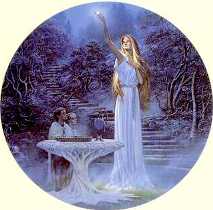
 The following event(s) took place in Middle-earth on February 14th:
- The Mirror of Galadriel (1419)
- Gandalf returns to life, and lies in a trance (1419)
- [Join us on the Discussion Boards here]
1. The Mirror of Galadriel.
(from the appendices)
"With water from the stream Galadriel filled the basin to the brim, and breathed on it, and when the water was still again she spoke. 'Here is the Mirror of Galadriel,' she said. 'I have brought you here so that you may look in it, if you will.'"
(Tolkien, 1965 Ballantine, p. 468 FotR)
2. Gandalf returns to life, and lies in a trance.
(from the appendices)
"'I was alone, forgotten, without escape upon the hard horn of the world. There I lay staring upward, while the stars wheeled over, and each day was as long as a life-age of the earth.'"
(Tolkien, 1965 Ballantine, p. 135 TT)
Jefferson’s Fossils
Feb. 13th, 2026 02:45 pmjstordaily_feedThomas Jefferson was many things: a revolutionary, an enslaver, a horticulturist, and—by some accounts—the “father of American vertebrate paleontology.” Science historian Keith Thomson looks at Jefferson’s study of fossils—which he suggested were not fossils at all—in an effort to win respect for the natural life of North America.
Thomson writes that, in 1785, Jefferson published Notes on the State of Virginia, a rejoinder to French natural philosopher Count Buffon, who argued that the animals (and people) of the Americas were inferior to those of the Old World. In part, this had to do with the physical size and ferocity of native creatures. Key to Jefferson’s argument was a discussion of fossilized tusks and other remains from an American mastodon that had recently been discovered near the Ohio River.
Jefferson examined several possible explanations for these clearly elephant-like bones showing up in a place far colder than India or Africa. He examined possible solutions proposed by others, including that “an internal fire may once have warmed those regions.” Ultimately, though, he reached a solution reasonably close to a modern scientific explanation: There are different kinds of elephants suited to different climates.
Thomson writes that, for nearly a decade after publishing Notes, Jefferson abandoned scientific work for politics. But in 1796, after he had temporarily retired from government employment, he received a letter from a friend regarding the discovery, in what’s now West Virginia, of “the Bones of a Tremendous animal.” The letter also suggested that the creature “probably was of the Lion kind.”
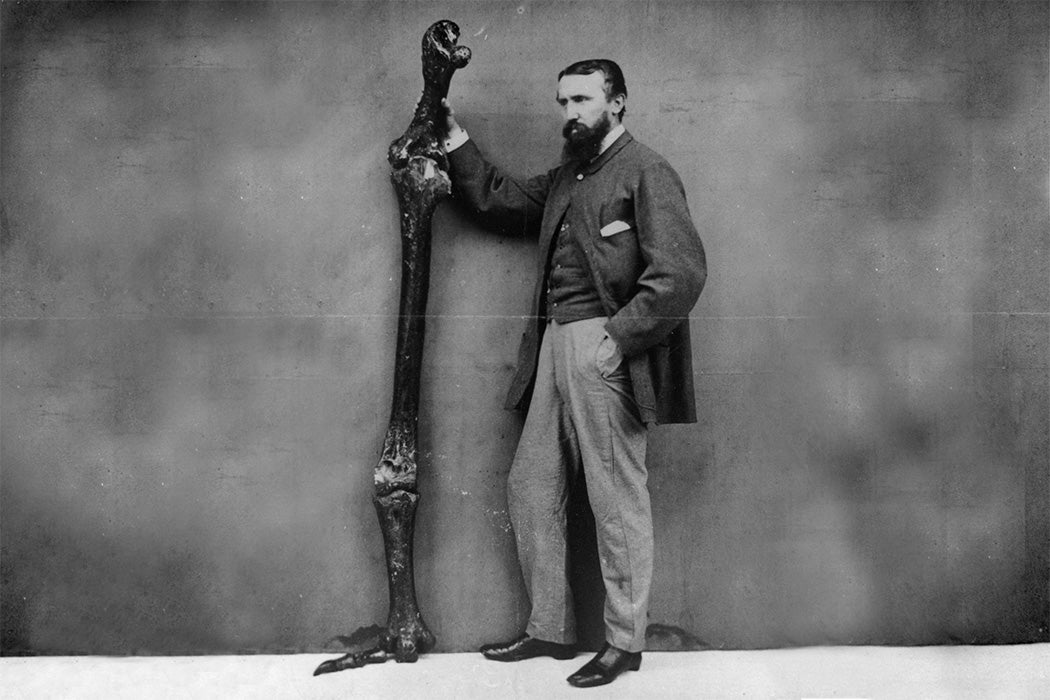
The fossilized bones of the “great-claw,” shipped to Jefferson’s residence, were parts of a giant, clawed limb. Following his friend’s lead, Jefferson worked on the assumption that this had been some sort of lion—but one with claws at least three times the length of an African lion’s.
More to Explore
The Dinosaur Bone Wars
However, after seeing a drawing of a South American giant sloth fossil—a genus known as Megatherium—he reluctantly acknowledged that this was a better fit. In the paper he published on the fossil, Thomson writes, “Jefferson still seemed to cling to the idea that things would turn around and it would be revealed as a giant lion after all.”
Weekly Newsletter
Importantly, Jefferson’s championing of American megafauna was based on the idea that the fossils were not just the remains of ancient species but the bones of creatures that probably still existed somewhere on the continent. (Fellow scientists of his time used the word “fossil” in its modern sense, but Jefferson consistently referred to the discoveries he studied as “bones.”) He based this partly in religious conviction that God was unlikely to annihilate a type of animal and partly in secondhand stories of enormous creatures from the Indigenous nations of the American West.
While later history proved many of Jefferson’s suppositions incorrect, Thomson suggests he would have been thrilled by the discovery of dinosaur fossils in the American West, even if the creatures they came from were demonstrably extinct.
The post Jefferson’s Fossils appeared first on JSTOR Daily.
新鮮! Fresh!
Feb. 12th, 2026 11:00 pmmaru_feedConsuming the Empire
Feb. 12th, 2026 02:35 pmjstordaily_feedWhat did British imperialism ever do for the Welsh miner, the English factory worker, or the Scots shepherd? As it happens, the empire plied them with sugar, tea, coffee, tobacco, and spices, once exotic products that became ubiquitous during the long eighteenth century. Low prices, extensive systems of credit, and efficient distribution networks spread the spoils of Asia, Africa, and the Americas across “the geographic and social spectrums” of Great Britain, in the words of historian Troy Bickham.
“[In the 1790s,] Anne Gomm’s little grocery in the small Cotswold village of Shipton-under-Wychwood was typical in that it offered customers a choice of at least half a dozen types of tea, three types of coffee, various types and qualities of tobacco products, several types of sugar, orange peel, confectionery, chocolate and an assortment of spices that included nutmeg, Jamaica pepper [allspice], cinnamon, ground ginger, and black pepper.”
Food was a primary import from the colonies. Bickham goes so far as to call food the “heart of the British imperial experience.” People literally ate and drank the empire, or snorted and smoked it when it came to “Virginia’s Best” tobacco. And these voracious consumers of the metropole helped grow the imperial project: “The English, and later British, penchant for sweet, hot beverages helped to fuel the empire’s expansion into Asia, transformed the ecosystems of large swathes of the Americas and doomed millions of Africans and their descendants to slavery.”
“The food trade was essential to the success of the empire and the military fiscal state that helped fuel it,” Bickham writes. He offers these examples of the wealth flowing in: custom duties “on coffee alone in 1774 was enough to build five ships of the line; the annual duty on sugar in the 1760s was roughly equivalent to the cost of maintaining all the ships in the British navy.”
Between 1650 and 1800, British per capita sugar consumption increased 2,500 percent to reach 20 pounds annually. Tea, into which much of that sugar went, was available from some 62,000 licensed British retailers by 1800. In the early 1770s, more than 7.5 million pounds of coffee, always second to tea among hot beverages, entered the country each year.
More to Explore

The Colonial History of the Telegraph
Advertising for tea, coffee, and tobacco consistently placed great “emphasis on where their products originated.” Tea meant China; in fact, an English slang word for tea, “char,” comes directly from the Chinese. Tobacco was associated with the Americas, particularly Virginia. Advertising portrayed the slaves that produced the nicotine-bearing leaf under white overseers: consumers may not have thought about where their pleasures were coming from, but the sources were not hidden from them. Sugar was an exception, perhaps because it was already a known commodity before it poured in from the West Indies, where its cultivation was introduced and maintained under horrific conditions.
Weekly Newsletter
It wasn’t just exotic-become-quotidian stimulants. Imperialism transformed British cookery too. British cookbooks included recipes for curry, mango pickle, pilaf, Mulligatawny, and “Carolina rice pudding,” among many other foreign recipes, beginning in the late 1740s. There was a concerted effort by the authors of these cookbooks to authenticate these recipes, using such phrases as ”the West Indian way,” “as in China,” and “as found in New England.” Or they were at least claiming the pretense of authenticity: curry in Britain “was a distant Anglicized cousin to what Indians ate.”
Gastronomy and trade intertwined to make “some extremely wealthy and others slaves.” Bickham continues: “trade helped to produce the modern consumer” in Britain, with print advertising coming into its own during the eighteenth century.
“Such products as coffee, tea and tobacco did not just infiltrate Britain, as they had in the seventeenth century; they swarmed into virtually every home to become part of the daily routine of most Britons.”
The mass consumption of products from distant places, heedless of the social and environmental costs, has deep historical roots.
The post Consuming the Empire appeared first on JSTOR Daily.
お久しぶりのハリー!Long time no see Harry!
Feb. 11th, 2026 11:00 pmmaru_feedWayne Thiebaud’s Sweet Take on American Art
Feb. 11th, 2026 04:45 pmjstordaily_feedPancakes. Burgers. Sundaes. Display cases of pies oozing filling and tiered cakes topped with cherries. Plates of food ready to eat. The feasts look scrumptious, but the cakes are iced with thick layers of paint, and the pies are luminous with colors more often found at an artist’s easel than a confectioner’s station. Even so, both the desserts and the paintings that showcase them are undoubtedly American creations.
With his luscious oil paintings in bright, rainbow hues, Wayne Thiebaud (1920–2021) delighted in tricking viewers into thinking they were staring through the display case windows of American diners. Thiebaud may be internationally beloved, but his works are grounded in specificity. As many of his contemporaries moved towards complete abstraction, Thiebaud remained rooted in realism and committed to his subject matter: the United States of the twentieth century. Thiebaud was intrigued by commonplace and ubiquitous experiences, and his paintings display a distinct nostalgia even as they veer away from sentimentality.
Thiebaud’s introduction to art came by peeling through newspapers in search of cartoons. During his childhood, he took to cutting out and copying the strips and eventually, when he was about 15, started to submit his own versions to magazines. This fascination led to him getting a gig as an “inbetweener” for Walt Disney Studios, drawing the intermediary frames in between key frames to allow the action to appear smooth and seamless in projection.
But his tenure at Disney was short-lived; he was fired for being a union man. During World War II, Thiebaud enlisted in the Army Air Forces and worked for the First Motion Picture Unit, where he helped craft topographical models of Japan to assist the pilots charged with the bombing campaign. After the war, and with the assistance of the G.I. Bill, he returned to school, interested for the first time in a formal arts education. In 1960, after earning a master’s degree, he started working as an assistant professor at the University of California, Davis. He taught there for the rest of his life, influencing generations of students as he developed and redeveloped his own art and interests. His experiences with cartoons, sign painting, and advertising all influenced the art for which he later became famous.
Weekly Newsletter
Although Thiebaud also painted sprawling mesas, towering cityscapes, and sun-drenched coastlines (inspiring its own California license plate), it’s the depictions of food that are unmistakably his. The barely garnished hot dogs of state fairs and the decadent milkshakes of soda shops have all been immortalized in his artworks. When Thiebaud was just starting out painting, he spent a year in New York City; there he befriended Willem de Kooning who advised him to pick a subject matter that felt genuine, saying: “Find something you really know something about and that you’re interested in, and just do that.” Diners with their dessert spreads, gumball machines with their colorful candies for mere cents, arcade games with their whiff of possibilities—these were, to Thiebaud, real experiences. These were the inexpensive pleasures on offer everywhere.
Thiebaud’s art is both realistic and exaggerated, influenced by everything from classical Masters to abstractionism. Admiring Thiebaud’s paintings, abstract expressionist painter Barnett Newman told him that “[t]hose European surrealists are boys compared to what you can do with a gumball machine. That’s a real surreal object in you.” But labeling Thiebaud and his art is surprisingly difficult. His paintings are heavy with allusions to Velázquez and Degas, Manet and Eakins, and they’re simultaneously humor-filled and containing a deep sense of time. He admired Chinese paintings, Japanese prints, cave art, and impressionism, and hated the idea of linear progress in art—or regional identity. Born in Arizona and raised on the West Coast, he rejected the label of “California painter” imposed by New York art critics; the very idea caused him to scornfully remark that “referring to ‘California painting’ is like referring to California mathematics.” Instead, he viewed himself as a type of art magpie, lifting ideas that he took a shine to—and freely admitting to it.
In 1962, an exhibition at the Allan Stone Gallery in New York City mislabeled Thiebaud’s work as Pop Art. Like René Magritte, who repeatedly disowned the label of Pop Art, Thiebaud disliked the term and found it ill-fitting for the type of realistic, paint-heavy work he undertook. However, Thiebaud also later attributed some of his success to that faulty categorization, saying, “I think I was wrongly given fame which I wouldn’t have gotten without that movement. I’m aware of the fact that occurred and thankful for it, except I’ve never thought of myself to be part of the Pop Art movement.” He didn’t like the flat, mechanical look of much of Pop Art, comparing it to advertising (and he thought advertising was more successful at it). Indeed, Roy Lichtenstein referred to his own art, and Pop Art in general, as a type of “industrial painting,” a sentiment with which Thiebaud agreed. On one trip to New York, a gallery representative showed him a silk-screened piece decorated with Coca-Cola bottles and asked what he thought of the work. “Not much,” he replied. It was by Andy Warhol. Thiebaud never revised his opinion.
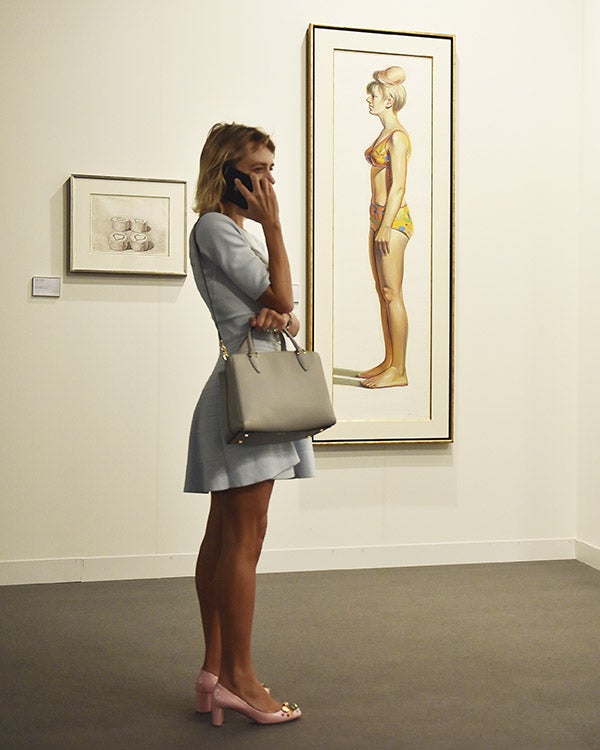
Thiebaud was also uninterested in the dead-end abstract styles where a piece completely separated the viewer from a sense of place or self, reiterating that he was “determined to elude any one-dimensional approach to the description of form.” He might admire a Frank Stella piece for its impact but felt ungrounded without a setting. He described the appeal of his subject matter—ice cream piled atop waffle cones, colorful balls rolling across the canvas—as “sensual impulses,” and he consistently experimented with light and texture in the pursuit of greater richness in his paintings. He was more interested in the greater questions about the human condition, which he felt that Pop Art and Abstract Expressionism disregarded.
Time, however, was also a concern of the setting. Thiebaud was fascinated by how time was reflected, alluded to, or compressed in paintings. As an artist who often painted from recollection, he strove to represent moments and composite memories with his pies, cakes, and gumball machines, remarking that “this is perhaps what makes them seem like icons, in a sense; they’re greatly conventionalized in many ways and yet they may allude to spatial and volumetric associations.” Thanks to these efforts, there’s no fear of becoming ungrounded in Thiebaud’s works. Each work is a window into the twentieth-century United States through the lens of delicatessen counters, fairground foods, and slot machines.
More to Explore
Why We Connect with Vincent van Gogh’s Paintings
Again and again, Thiebaud returned to artists he admired to inspire his own pieces. Based on Degas’s The Millinery Shop, with its fashionable bonnets arranged on hat stands, Thiebaud painted Display Cakes (1963). Similarly, Degas’s L’Absinthe, portraying a couple who dejectedly slouch over their drinks in a bar, inspired Eating Figures (Quick Snack). In his version, the pair, now painted in cheery, bright colors, sits on stools and stares wearily at their hot dogs. Moreover, Thiebaud’s Confections (1962) depicts three tall desserts alongside a short, squat fourth in a nearly identical composition to Giorgio Morandi’s Still Life (1941), with its scene of perfume bottles arranged unevenly on a table. Even as Thiebaud advanced in his career, he continued to find inspiration from artists and artworks he admired and fused those with scenes from his personal life. Several years after buying a new house in San Francisco, Thiebaud painted View from Potrero Hill (1987), which looks out from his and across the cityscape; in doing so, he drew on Paul Cézanne’s The Gulf of Marseille Seen from L’Estaque, including the iconic smokestacks standing tall above the houses. Even when Thiebaud’s pieces draw from other classical works, they never lose their sense of place or time. When viewers look at his paintings, they always have one foot in the United States.

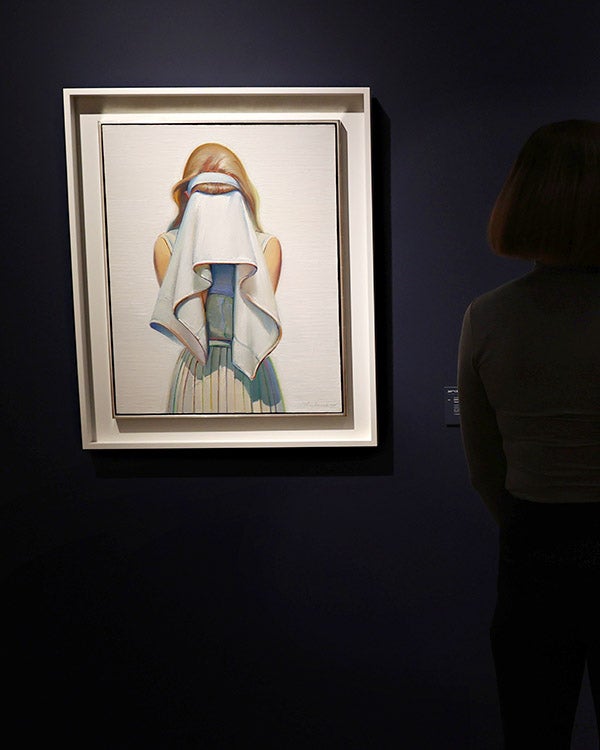
Thiebaud’s paintings are decadent. The red franks are nestled in their golden buns ready for consumption. His cakes feature thick layers of paint, swirled to mimic the application of icing. Standing in front of a Thiebaud painting gives a viewer the impression the artist likes dessert. (And he did. Lemon meringue pie was his favorite.) But there’s also a depth to his canvases. Look even closer at one of his pieces and notice the shifting hues that provide the outlines for his subjects as he played with light and object placement, even while referencing some of the most well-known pieces in art history.
Thiebaud was intrigued by the possibilities of still lives, and heavily influenced by those created by his artistic heroes Degas, Morandi, and Harnett. The tableaux and friezes they fashioned created scenes of drama enhanced by their choice of objects. Speaking on the worth of still life depictions, Thiebaud said:
We are interested because the things which happened over a hundred years ago are visually and materially attractive to us in terms of intrigue; how did they curl their hair, how did they cook their soup, how did they make their pies and so on. The remnants of that era are uncommon to us, they seem rather special.
The same can be said for the enduring interest in Thiebaud’s bubblegum dispensers, candy apples, and diner foods. In them, we recognize a time and place that has slipped away.
Thiebaud continued painting until he died in 2021 at the age of 101. He outlived the Pop artists to whom he was compared, as well as many of his critics. His more than seven-decade career inspired others—the photographer Sharon Core reinterpreted Thiebaud by baking the foods he depicted and then photographing them—and provided ample fodder for museums. The Crocker Art Museum in California, for instance, has hosted a Thiebaud exhibition every decade since 1951. His paintings, in their simplicity and through the emotions they evoke, have also been increasingly appreciated by the wider art market. The year before Thiebaud passed away, Four Pinball Machines (1962) set a record for his work when it was auctioned off for more than $19 million.
The recent exhibition of Thiebaud works at San Francisco’s Legion of Honor used the excuse of their own centenary to celebrate the artist’s many years of productivity. In doing so, it became the first to focus on Thiebaud’s artistic reinterpretations, revealing how he shamelessly stole from his heroes and reinterpreted their work in his humorous, luminous, American way. In interviews, Thiebaud refused easy categorization, announcing that “art comes from art,” as he talked across movements and styles; perhaps, then, it’s up to viewers to decide where they want to place him.
Given how evasive Thiebaud was in discussing genres, what a blessing it is for curators everywhere that he spoke so openly about his inspirations for individual paintings; otherwise, side-by-side comparisons might not exist. Whether in the tradition of Degas or Duchamp, he completely reformulated and reinvented the pieces with his own slant on American life. One thing’s certain: although Thiebaud’s America of the 1930s and ’40s no longer exists, his slice of Americana is still recognizable and immensely popular. Any visitors to an exhibition of his can expect to leave hungry.
The post Wayne Thiebaud’s Sweet Take on American Art appeared first on JSTOR Daily.
Hunt for Gollum film Synopsis promises “New characters, returning heroes”
Feb. 11th, 2026 04:47 pmthe_one_ring_net_feed
Upcoming movie to take fans on an unexpected journey through time in telling the story of Sméagol.
A new Spy Report collaboration with Knight Edge Media brings what looks like a leaked, possibly official, synopsis for the upcoming feature film The Lord of the Rings: The Hunt for Gollum. While we cannot absolutely verify if it's a "final" version, the story points hinted at align with previous rumors, leaks, casting auditions, and even things Ian Mckellen has said.
TheOneRing.net reached out to WB for comment or confirmation, but they had nothing to share at this time; nor had anyone in New Zealand.
Film Synopsis
Here is the full text as sent to us via spy report. Reminder, you can drop us inside info (or casual info!) to spymaster ~at~ theonering.net
Before the Fellowship, one creature's obsession holds the key to Middle-earth's survival -- or its demise. In The Lord of the Rings: The Hunt for Gollum, we meet young Smeagol -- an outsider drawn to trinkets and mischief -- long before The One Ring consumed him and began his tragic descent into the tortured, deceitful creature Gollum. With the ring lost and carried away by Bilbo Baggins, Gollum finds himself compelled to leave his cave in search of it.
Gandalf the Grey calls upon Aragorn, still known as the ranger Strider, to track the elusive creature whose knowledge of the whereabouts of the ring could tip the balance toward the Dark Lord Sauron. Set in the shadowed time between Bilbo's birthday disappearance and the Fellowship's formation, this perilous journey through Middle-earth's darkest corners reveals untold truths, tests the resolve of its future king, and explores the fractured soul and backstory of Gollum, one of Tolkien's most enigmatic characters.
Directed by original cast member Andy Serkis, produced by Peter Jackson, and written & produced by Fran Walsh and Phillipa Boyens -- the creative team behind the Oscar-winning trilogy -- this live-action movie bridges the beloved films with new characters, returning heroes, and a deeply engaging origin story that resets the stage for, and changes everything you know about the legendary Lord of the Rings trilogy.
Deconstructing Marketing Language
There's a lot to unpack here, so staffers Greendragon and Quickbeam spent the second hour of TORN Tuesday analyzing every word. Watch below or on Youtube.
The most apparently surprising part of the synopsis - a confirmation we will be seeing young Sméagol. Is director Andy Serkis inspired by Young Sheldon, or young Anakin from The Phantom Menace, or even the merchandising hit "Baby Yoda" Grogu?
Another interesting thing is the calling out of Aragorn by name, which implies huge boots to fill for some new actor as they recast the role without Viggo Mortensen. Also of note is the inclusion of Fran Walsh, part of the Oscar-winning trifecta accompanying Peter Jackson and Philippa Boyens. They start filming in New Zealand in July for a December 2027 release.
We will have more analysis in the coming days, but what do you think? Join the live daily chat on Discord.
Love Is Blind … but Are Your Hormones?
Feb. 10th, 2026 04:40 pmjstordaily_feedImagine sitting in a pod, speaking to a stranger you’ve never seen, separated by a wall … and then getting engaged to them. Six years ago, the idea might have seemed unthinkable. But in 2026, with its tenth season set to premier this week, Love is Blind is Netflix’s biggest hit ever.
Could the Pod Squad be on to something here? Could taking faces out of the equation lead to better matchups in the long run? Actually, maybe it could—at least when it’s women doing the picking. A long-standing idea in evolutionary psychology is that the type of male faces women prefer fluctuates with their menstrual cycle: Supposedly, when fertility peaks, women prefer more “masculine” faces—stronger jaws, heavier brows, a certain ruggedness. During other phases of their cycle, they prefer men with more “feminine” faces. The evolutionary logic? “Masculine” men might make better mates, but “feminine” men might make more reliable partners (like Love is Blind, evolutionary psychology is super heteronormative).
Seems like a clever theory—but as situationships, dating apps, dating shows, and the so-called male loneliness epidemic take center stage in public discourse, it’s worth asking whether these claims about attraction truly stand the test of time.
So, as a diligent researcher and ardent reality-TV watcher (everybody has their vices), I dove headfirst into the literature. It turns out, as far back as 2018—when Love is Blind was just a twinkle in a producer’s eye—we already had a pretty definitive answer. A research team based in Scotland recruited nearly 600 heterosexual women, all in their early twenties. Some were on the pill, some weren’t, and some started or stopped during the course of the study. This is crucial, because if women’s preference for masculine versus feminine faces really does fluctuate because of cycle-driven hormone changes, then we wouldn’t—of course—see those changes in women who are on the pill. And rather than, as most previous studies had done, just asking participants about the dates of their cycles—which can be unreliable—these researchers measured hormone levels directly and precisely, using saliva samples.
More to Explore
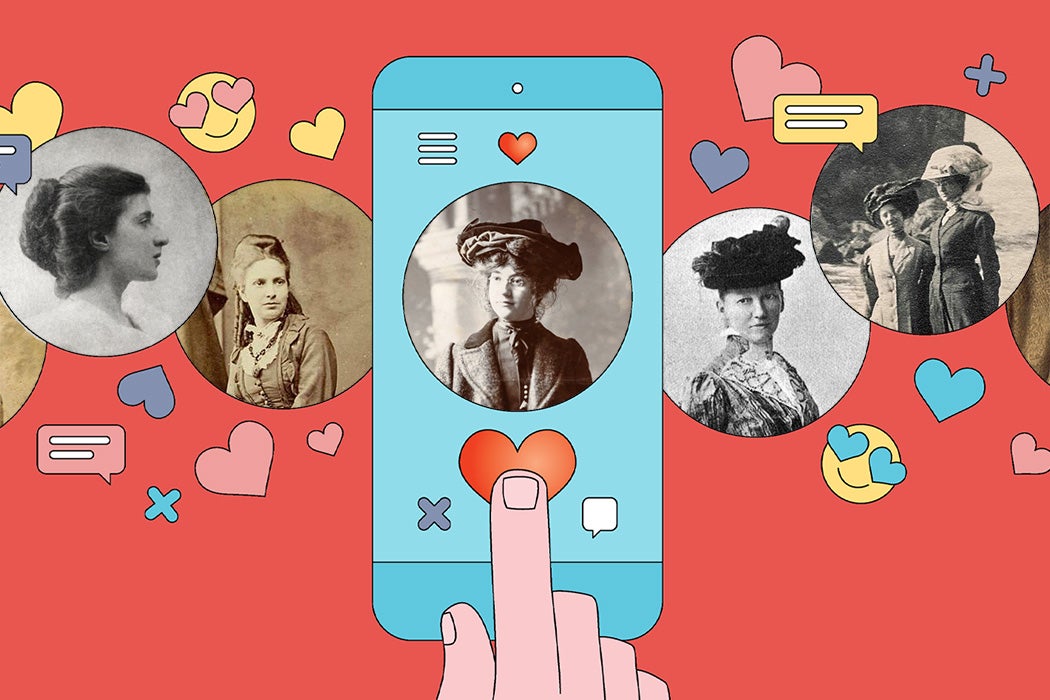
The “Dating Apps” of Victorian England
On the same lab visits, the women completed a simple task: rating men’s faces for attractiveness. They were shown pairs of male faces, where one was digitally masculinized (sharper jaw, heavier brow), the other feminized, and asked which man they found more attractive, either for a short-term fling or as a long-term partner. This process was repeated across multiple sessions, to identify any hormone-driven changes in individual women’s preferences.
So, do women’s preferences swing from Timothée Chalamet to Jason Momoa as their fertility fluctuates during the month? Well, the statistics (yep, yep) say—not exactly. While women did tend to prefer more masculine-looking faces overall, particularly for short-term flings, this preference didn’t rise and fall with their hormone levels. Neither did being on the pill—or switching onto the pill over the course of the study—wipe out this Jason-Momoa effect. If anything, women taking an oral contraceptive pill showed a bigger preference for hyper-masculine faces (the theory, of course, predicts exactly the opposite).
Weekly Newsletter
This doesn’t mean attraction is random. Cultural ideals, personality, individual quirks, and physical attractiveness all play huge roles. But it does go to show that your hormones aren’t defining your type. And maybe that’s more interesting. Rather than being at the mercy of invisible chemical tides, our romantic choices seem to be shaped more by psychology, society, and personal history.
So, can the messy, hot-and-cold behaviour we see once the contestants are out of the pods be explained by hormone-driven changes in women’s facial preferences? No. When it comes to attraction, our hormones aren’t pulling the strings as much as we thought. Looks might matter, sure, but love seems to be playing a longer, messier, and more human game.
The post Love Is Blind … but Are Your Hormones? appeared first on JSTOR Daily.